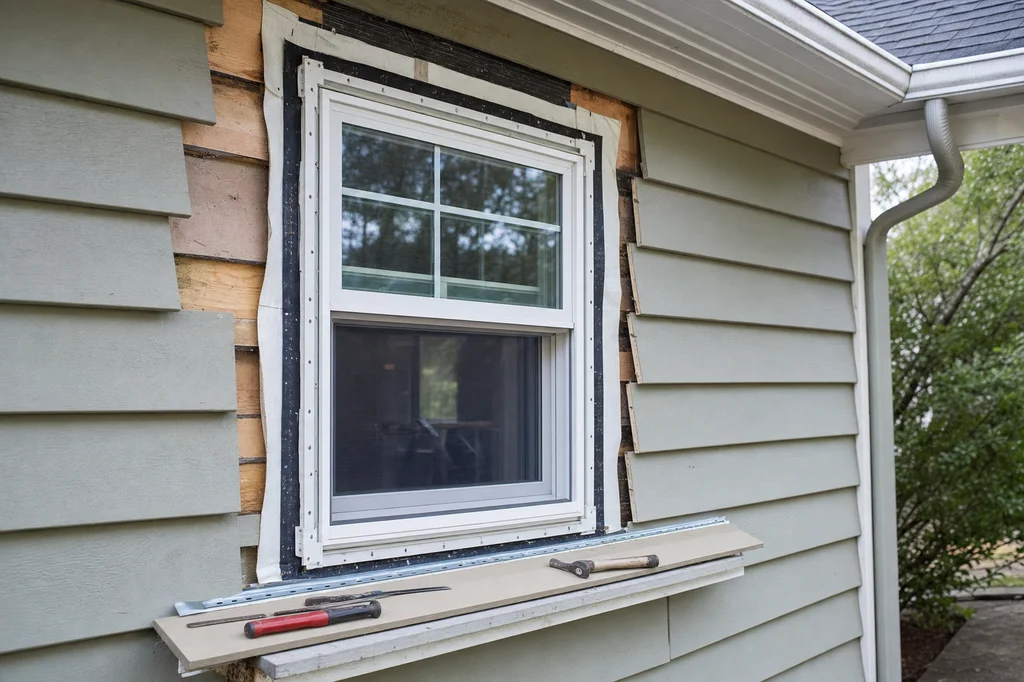
Use this insurance claim code enforcement checklist before accepting a cheaper repair scope: verify the manufacturer-approved installation method and check whether the permit has open corrections or an expired inspection record. A lower-cost scope is not automatically an acceptable installation.
Why the repair scope can be the real claim dispute
The central question is not simply whether a damaged item can be replaced for less. It is whether the proposed method can be installed as the manufacturer requires and accepted under the applicable local code process.
A building official described a hail-damage claim involving durable hardboard lap siding and damaged windows. The proposed repair was to cut out the existing window, remove the nailing flange from a replacement window, insert it into the opening, fasten it through the jambs, and caulk it. The contention was that removing siding to install the new window with its flange intact would cost more.
That distinction matters because the manufacturer had no installation detail permitting the flange to be cut off and the window to be jamb-screwed into place. In the official's view, the manufacturer's installation criteria were part of the code requirements for that work. A less expensive approach may therefore conflict with the installation method required for the product.
For you, the practical issue is simple: do not treat a repair scope as complete just because an adjuster, appraiser, or contractor has agreed on a price. Read the actual work description and identify how the replacement product is supposed to be installed.
What to check before approving a lower-cost repair
Use the proposed scope as a checklist, not just a payment document. You want enough detail to tell whether the contractor can complete the work without bypassing the replacement product's instructions.
- Name the replacement product. The scope should identify the window, siding, roofing, or other material being installed. A generic line item makes it harder to compare the planned method with the manufacturer's instructions.
- Find the installation detail that applies. Ask for the manufacturer document covering the specific replacement condition. In the window example, the key issue was whether the manufacturer allowed removal of the nailing flange and fastening through the jambs.
- Identify work needed to reach the correct installation plane. Exterior finishes may need removal or temporary opening so a replacement can be installed as designed. Do not assume that avoiding siding removal is automatically a valid savings.
- Check whether a permit is required. Permit and inspection requirements are local. The designated building official in the jurisdiction administers permits, inspections, and related records.
- Request the permit number and inspection status. If work is permitted, confirm whether inspections have passed and whether correction notices remain open.
- Keep the scope, instructions, permit record, and correspondence together. These documents help you compare what was proposed, what was installed, and what the jurisdiction accepted.
This is not a reason to assume every repair requires a larger scope. It is a reason to make sure the chosen scope has a documented installation path rather than relying on a verbal assurance that the work is done that way elsewhere.
“Inspectors allow it” is not a substitute for product instructions
A contractor may point to work performed in other jurisdictions or say that nearby inspectors have accepted a certain shortcut. That statement alone does not establish that your project meets the applicable requirements.
The building official described a difference between identifying code language and administering it. A designated local official handles the permit, inspections, and reporting in that jurisdiction. Another knowledgeable code professional may help identify and summarize relevant requirements, but the local process still controls permit administration for your address.
More importantly, an official's interpretation may not erase a manufacturer requirement that applies to the product installation. Where the written instructions do not allow a proposed method, treat that as a real issue to resolve before installation—not a detail to settle after the old materials have been removed.
If the scope involves windows, siding, roofing, or another assembly with layers that overlap, have a licensed professional explain in writing how the work will preserve the required installation sequence. If there is disagreement about local requirements, confirm the issue with the designated building official or another qualified local code professional.
Open corrections and expired permits can leave you with unfinished business
An issued permit does not prove that the work was completed correctly. A permit can have an unresolved correction, and a contractor may fail to schedule or complete the follow-up inspection.
Permit expiration and the response to an unresolved correction vary by jurisdiction, the seriousness of the correction, and the resources of the building department. In the example described, the office had begun sending an expired inspection record to the homeowner as well as the contractor so owners would know that follow-up had not occurred.
An expired record is not something to ignore. It may mean the work still needs review, correction, or a new permit process depending on the local department's rules. Contact the permitting office directly, provide the permit number, and ask whether the record is final, expired, open, or awaiting a correction. Do not rely only on the contractor's description of the status.
Questions that expose a weak repair scope
These questions focus the conversation on the installation method and the closeout record. Use them before authorizing work or releasing a final payment under your contract.
- Which manufacturer installation document supports this exact repair method?
- Does the scope require removing or opening any siding, roofing, trim, or other material to install the replacement product correctly?
- Will this project need a permit in my jurisdiction, and who is responsible for arranging inspections?
- What permit number will appear on the job documents?
- Are there any failed inspections, open corrections, or follow-up inspections still needed?
- If the proposed method is different from the manufacturer's standard detail, who will provide written approval from the appropriate authority?
The costly mistake is accepting vague language such as “replace as needed” when the real dispute is how the replacement will be attached, sealed, and inspected. A detailed scope gives you a basis to compare alternatives before the project reaches that point.
Choose a contractor who will document the method and closeout
For a claim repair with a disputed scope, select a contractor willing to identify the product instructions, permit responsibility, and inspection closeout in writing. Directorii lists verified contractors.
Insurance coverage, local permitting, and code interpretation can vary by policy, contract, product, and jurisdiction. For a disputed claim scope, confirm insurance questions with your insurer and policy documents, and confirm local code and permit questions with the local building department or a licensed professional.
Source: Roofing and Siding Insurance Claims: Code Abuse/Enforcement
FAQ
How can I tell whether an insurance repair method follows the manufacturer instructions?
Ask for the installation document that applies to the exact replacement product and repair condition. Compare it with the written scope, especially where the scope changes how a window, siding, or roofing component will be fastened or sealed. If the instructions do not support the proposed method, resolve that issue before work begins.
Can a contractor remove a window nailing flange to make an insurance repair cheaper?
That depends on the replacement window manufacturer's instructions and the applicable local requirements. In the described claim, no manufacturer detail allowed the flange to be removed and the window to be fastened through the jambs. A lower-cost method should not be accepted without documentation supporting that specific installation.
Should I accept a smaller scope if the contractor says inspectors allow it?
Do not rely on that statement by itself. Acceptance in another jurisdiction or on another project does not show that your replacement product can be installed as required or that your local permit process will accept it. Review the manufacturer instructions and confirm local permit questions with the designated building department.
What should I check on a permit after insurance repair work is finished?
Check the permit number, inspection status, and whether any correction notices remain open. Ask the local permitting office whether the record is final, awaiting inspection, expired, or unresolved. An issued permit alone does not show that follow-up inspections occurred or that a correction was completed.
What does an expired inspection record mean for my home?
An expired record can mean that required follow-up did not occur, but the effect depends on the local building department and the project circumstances. Contact your local office directly to learn what the record means and what action is needed.