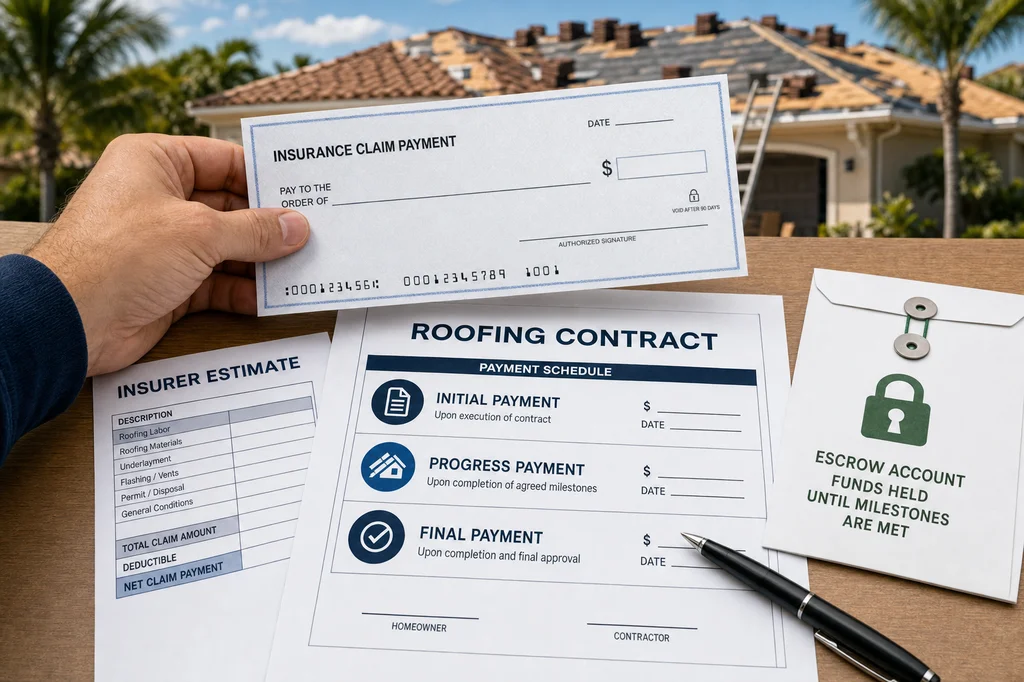
A Citizens Insurance claim payment in Florida deserves a careful handoff, not a rushed signature. Before releasing an insurance check to a roofer, confirm who is named on it, match payment timing to written contract milestones, and decide whether an escrow arrangement is appropriate for your project.
Review the payee and claim documents first
Citizens Insurance has changed its claim-payment approach so checks are written to homeowners rather than directly to roofers or adjusters. The change may affect some older policies as well as newer ones.
Before depositing, endorsing, or handing over a claim payment, review the check and the claim correspondence. Keep the payment notice, estimate, and roofing contract together so you can see what the payment is intended to address and how it fits the agreed roof scope.
The practical point is simple: an insurance payment is money connected to a specific claim. Handle it in a way that matches the payment documents and your agreement with the contractor.
Match roof-payment milestones to completed work
A written payment schedule can prevent a claim check from becoming the center of a dispute. It should identify what work must be completed before each payment is due.
Some Florida contractors were reported as seeking larger deposits, including deposits described as 20% to 30%, after the Citizens payment change. That is a reported response by some contractors, not a universal requirement or a standard you must accept. A large upfront request deserves a clear explanation of what materials, scheduling, or other defined work it covers.
Before signing, make sure the contract separates these items in plain language:
- Total contract amount: the agreed price for the defined roof scope.
- Initial payment: the amount and the specific purpose of that payment.
- Progress milestones: identifiable stages tied to completed work or delivered materials, rather than vague requests for more money.
- Change orders: a written process for work not included in the original scope.
- Final payment: what completion looks like and what documentation you will receive before the final release.
Roofing companies have material and labor costs, so a payment schedule does not mean a contractor receives nothing until every detail is finished. It means the sequence should be understandable before work starts, with no pressure to turn over insurance funds without a documented reason.
When escrow may fit a Florida roofing claim
Escrow may be useful when you and the contractor want funds held until agreed project conditions are met. It can reduce the pressure of giving a roofer control of the entire claim payment before the work is complete.
The reported payment change prompted discussion of escrow because homeowners may receive claim funds directly while contractors still need confidence that they will be paid for completed work. An escrow arrangement is not automatically necessary, and its terms matter more than its label.
If you are considering escrow, get the arrangement in writing before moving money. Confirm who holds the funds, what documents trigger a release, whether releases are partial or final, what happens if the scope changes, and how a dispute is handled. For questions about contract or insurance obligations, consult a qualified Florida attorney, your insurer, or an appropriate state consumer or insurance resource.
Escrow may be worth considering when the payment is substantial, the job has several stages, or either side is uneasy about releasing funds early. It is less useful if the agreement is vague about completion standards or lets one party release money without a defined milestone.
Keep payment questions from becoming roofing problems
The expensive mistake is choosing a roofer based only on who promises to handle the insurance money fastest. A solid contractor should be able to explain the roof scope, payment schedule, and documents without treating your claim check as an immediate handoff.
Compare the contract with the insurer's estimate where possible. Differences are not automatically wrong: a contractor may identify needed work that was not included in an initial estimate. But any difference should be documented and addressed through the appropriate claim or contract process, not buried in a rushed payment request.
Before releasing funds, use this short decision check:
- Is the roofer's legal business name and contact information on the contract?
- Does the scope describe the roofing work clearly enough to compare against the claim documents?
- Does each payment have a stated milestone?
- Have you received written change orders for added work?
- Do you understand who is named on the insurance payment and where the money will be held?
Directorii lists verified contractors. Use that starting point alongside a careful review of the contract and payment process.
What to say before you release claim funds
A direct, written question can surface confusion before it turns into delay. Ask for the payment process in an email or contract addendum, not just a verbal assurance.
You can say: “Please show me which contract milestone this payment covers, what work or materials it funds, who will hold the money, and what I will receive before the next payment is due.”
If the answer is unclear, pause the payment conversation and contact Citizens Insurance directly about the claim payment and its payees. A roofer can explain its contract, but it is not the final authority on insurance coverage or requirements attached to a Citizens payment.
Source: Roofing at a Crossroads: QXO vs Home Depot, Tariffs & Legal Turmoil
FAQ
Should I give my Citizens Insurance roof claim check to my roofer?
Only after you understand who is named on the payment and how releasing funds fits your written contract. Match the amount to a defined milestone or documented project need.
Why would Citizens Insurance send the roof claim payment to me instead of my roofer?
Citizens Insurance was reported as changing its payment approach so checks are written to homeowners rather than directly to roofers or adjusters. That means homeowners need a clear process for paying the contractor as agreed work is completed.
Can a roofer request a larger deposit after my Florida insurance claim?
A roofer can request a deposit, and some contractors were reported as seeking deposits of 20% to 30% after the Citizens payment change. Require a written explanation of what the deposit covers and how later payments connect to completed work.
When should I consider escrow for a roof insurance payment?
Escrow may make sense when a sizable claim payment, multiple work stages, or uncertainty about an early handoff makes a direct payment uncomfortable. Use written terms that identify the holder of the funds, release conditions, partial payments, and the process if the roof scope changes.
What contract details should I review before releasing insurance money?
Review the total price, roofing scope, initial-payment purpose, progress milestones, change-order process, and final-payment conditions. You should be able to connect each payment to a specific part of the project.