A letter claiming that a house does not need a certificate of occupancy can seem to answer an important pre-closing question. But a claimed exemption for an older house may not explain newer work visible on the property.
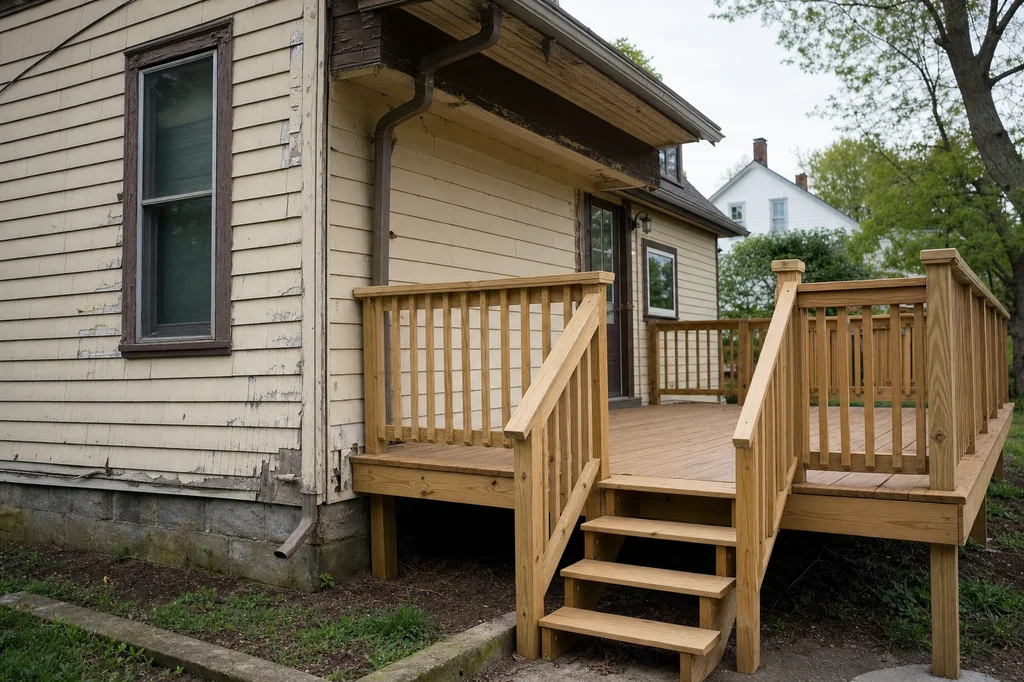
In a New York dispute, buyers requested a certificate of occupancy before closing on a house built in 1925. The sellers gave them a letter on official city letterhead stating that no certificate was needed because of the house's age and that there were no building-code violations. After moving in, the buyers found a new bedroom, two bathrooms, and an exterior deck. They alleged that the work had not been approved by the city and that the letter was forged.
Start with the 1925 exemption claim—and the newer work
The age of the original house and the status of later renovations are separate questions. A claim that a 1925 house was exempt from a certificate of occupancy requirement does not, by itself, establish that a new bedroom, two bathrooms, or an exterior deck received city approval.
Before buying a renovated older home, use this focused verification sequence:
- Get the exact letter. Review the document that makes the exemption claim, including the property address and the city office it appears to come from.
- Verify the letter directly with the city. Ask whether the city issued it and whether the stated exemption applies to that address.
- List the visible additions. In this dispute, the key additions were a bedroom, two bathrooms, and a deck. Identify comparable newer features in the house you are considering.
- Match additions to city approval records. Ask whether the city records account for the later work. Do not treat an age-based exemption as proof that every later alteration was approved.
- Resolve mismatches before closing. If the letter cannot be verified or the additions do not match available records, get qualified advice before proceeding.
A forged-looking letter can change the investigation
The buyers alleged that the letter actively hid unapproved work. Their fraud claims were initially dismissed under a buyer-beware approach. An appeals court later allowed the case to go forward, concluding that the alleged fake letter could have made meaningful investigation impossible.
In 2015, the parties settled. The sellers agreed to buy the house back, and the buyers dropped their fraud claims in exchange for that agreement.
This outcome does not set a universal rule for every home sale. If a city document appears unreliable, consult a qualified real-estate attorney before closing.
Use the purchase decision to address documented corrective work
The practical issue is not only whether a document is genuine. It is whether the house you are buying includes work that the city has not approved. If records show that corrective work is needed, understand that work before making a purchase decision.
An inspector can help identify recent-looking alterations in an older home, but city confirmation remains important for an exemption claim and approval history. If documented corrective work includes roofing, Directorii lists verified contractors.
Source: Caught Red-Handed: Contractors Falsify Documents to Sell Home
FAQ
What did the city letter claim in the 1925-house dispute?
The letter stated that the house did not need a certificate of occupancy because it was built in 1925, before the stated restrictions, and that there were no building-code violations. The buyers later alleged that the letter was forged.
Which additions raised questions after the buyers moved in?
The buyers found a new bedroom, two bathrooms, and an exterior deck. They alleged that the sellers had completed the work themselves and that none of it had been approved by the city.
How should I verify a claimed occupancy exemption?
Get the exact document and verify it directly with the city office it appears to come from. Also ask whether the claimed exemption applies to the property address and whether city records account for later additions.
Why is a home's age not enough to explain later renovations?
An exemption claim tied to the original 1925 house does not automatically establish approval for work added later. New bedrooms, bathrooms, and decks should be considered separately from the age of the original structure.
What happened in the New York dispute?
The buyers' fraud claims were first dismissed, but an appeals court allowed the case to proceed after finding that the alleged fake letter could have prevented meaningful investigation. In 2015, the sellers agreed to buy the house back and the buyers dropped their fraud claims.