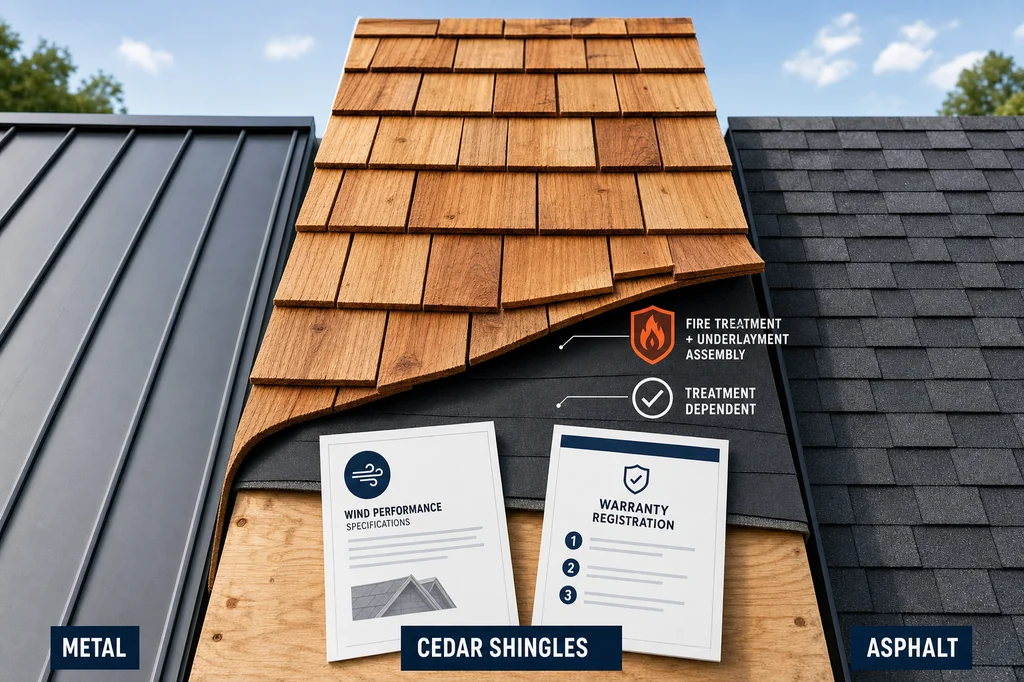
Choosing cedar shingles over metal or asphalt can make sense if you value a natural roof appearance, specific wind-performance claims, and renewable wood sourcing. But cedar is not a simple style upgrade: fire treatment, material grade, warranty registration, and installer experience can materially change the roof you receive.
Where cedar makes the strongest case
Cedar is primarily a choice for homeowners who want the look and texture of real wood rather than a manufactured imitation. East End Cedar’s Mark Carroll argued that many newer roofing products are designed to resemble cedar shakes or shingles, while cedar retains a distinct natural appearance as it ages.
That visual difference can matter most in areas where cedar is already part of the local architectural character. Carroll identified New England, the Mid-Atlantic, parts of Florida, the Outer Banks, and places such as Nantucket as markets where cedar remains established. That does not mean cedar is right for every house. It means the material may fit a home’s design and surrounding neighborhood better than a roof chosen only for familiarity.
Cedar is also presented as a renewable resource. Carroll said the forestry practices behind the products he sells include replanting after harvesting and that more than half of the wood cut is recovery wood from trees already down on the forest floor. Those are supplier and industry practices to verify for the specific material you are considering, not a blanket description of every cedar product on the market.
Wind claims deserve a product-specific comparison
Wind performance is one of cedar’s most concrete claimed advantages, especially for coastal homes. Carroll stated that a cedar shake can have a wind-uplift figure of 245 miles per hour, compared with 173 miles per hour for a cedar shingle.
The interview does not establish that either figure applies to every cedar roof. Ask for documentation for the exact shake or shingle being proposed rather than treating a stated wind-uplift figure as a promise for any cedar installation.
Metal roofs are a growing option for homeowners seeking a different architectural style, while Carroll identified asphalt as cedar’s main roofing competitor. The interview does not provide comparable wind-uplift figures for metal or asphalt, so compare the documents for the specific products proposed for your house rather than broad material labels.
- Choose cedar if real-wood appearance and the supplier’s documented wind and material specifications fit your home’s priorities.
- Consider metal if you prefer a manufactured roof system and a metal profile that suits your home’s architecture.
- Consider asphalt if the proposed shingle system meets your design and performance priorities without paying for cedar’s natural-wood character.
Fire treatment changes the cedar decision
Untreated cedar and fire-treated cedar are different decisions. In areas where fire spread is a concern, East End Cedar offers pressure-impregnated fire-retardant treatments that Carroll said can provide Class C or Class B ratings, with a Class A assembly possible when combined with certain underlayment.
The key point is that a fire rating may depend on the full roof assembly, not merely the visible cedar. Ask which treated product and underlayment are proposed and request documentation for the stated rating.
Carroll also said fire treatment can add cost. Before selecting cedar where fire spread is a concern, have the proposed product, treatment, and underlayment identified in the roofing scope.
Read cedar warranties as separate promises
A cedar warranty may cover several different issues, and each one has its own limits. Carroll described mill warranties for manufacturing defects, separate fire-treatment warranties, and preservative-treatment warranties against rot and decay.
For the products discussed, East End Cedar described fire-retardant coverage lasting 30 to 50 years depending on the product. It also described a pressure-impregnated preservative option with either a 30-year transferable warranty or a 50-year non-transferable warranty against rot and decay. Those terms are product-specific claims, not a predicted roof service life.
Walden Forest Products was identified as one mill whose warranties are registered with a numbered, hand-signed document sent to both the contractor and homeowner. That paperwork can help document the installed product and whether registration occurred. Read the actual warranty before signing a contract, including what is covered, excluded, transferable, and required for registration.
Why cedar installation experience matters
Cedar’s performance depends heavily on correct installation, which makes labor availability a real part of the material decision. Carroll acknowledged that fewer workers may be experienced with cedar and that cedar can take longer to install than asphalt shingles.
A cedar proposal should clearly identify the product, whether it is treated, the underlayment, flashings, fasteners, applicable warranty documents, and who is responsible for warranty registration. This makes it easier to compare cedar with metal or asphalt proposals without reducing the decision to appearance alone.
Questions to settle before approving a cedar reroof
- Is this a shake or a shingle, and what wind-uplift documentation applies to this exact product?
- Is the material natural, preservative-treated, fire-treated, or both?
- What fire rating is documented for the proposed cedar and underlayment?
- Which mill warranty applies, and who will register it?
- What grade certification accompanies the cedar material?
- What cedar-installation experience does the contractor have?
Choosing an installer unfamiliar with cedar-specific details can undermine the material’s stated benefits. Directorii lists verified contractors.
Source: East End Cedar Company interview
FAQ
Are cedar shingles better than metal or asphalt for high winds?
Cedar can have strong stated wind-uplift figures, but the relevant figure should apply to the exact product being proposed. East End Cedar reported a 245-mile-per-hour figure for a shake and 173 miles per hour for a shingle. The interview did not provide comparable figures for metal or asphalt products.
Can cedar roofing be treated for fire resistance?
Yes. East End Cedar said it offers pressure-treated fire-retardant cedar with Class C or Class B ratings, and that a Class A assembly may be possible with certain underlayment. Request documentation for the specific cedar and underlayment proposed.
What warranty should I expect with a cedar roof?
A cedar roof may have separate warranties for mill defects, fire treatment, and preservative treatment against rot and decay. East End Cedar described treatment warranties with different durations and transfer terms depending on the product. Read the actual warranty because a material warranty is not the same as a promise of total roof life or installation quality.
Is cedar roofing a renewable material?
Cedar can be sourced as a renewable material when it comes from managed forestry practices. East End Cedar stated that its supply chain includes replanting after harvest and substantial use of recovery wood from downed trees. Ask for documentation on the specific cedar product rather than relying on a general environmental claim.
Should I hire a contractor experienced with cedar shingles?
Cedar installation experience is worth prioritizing because Carroll said cedar can take longer to install than asphalt and experienced labor can be harder to find. Ask the contractor about experience with the proposed cedar product and responsibility for warranty registration.