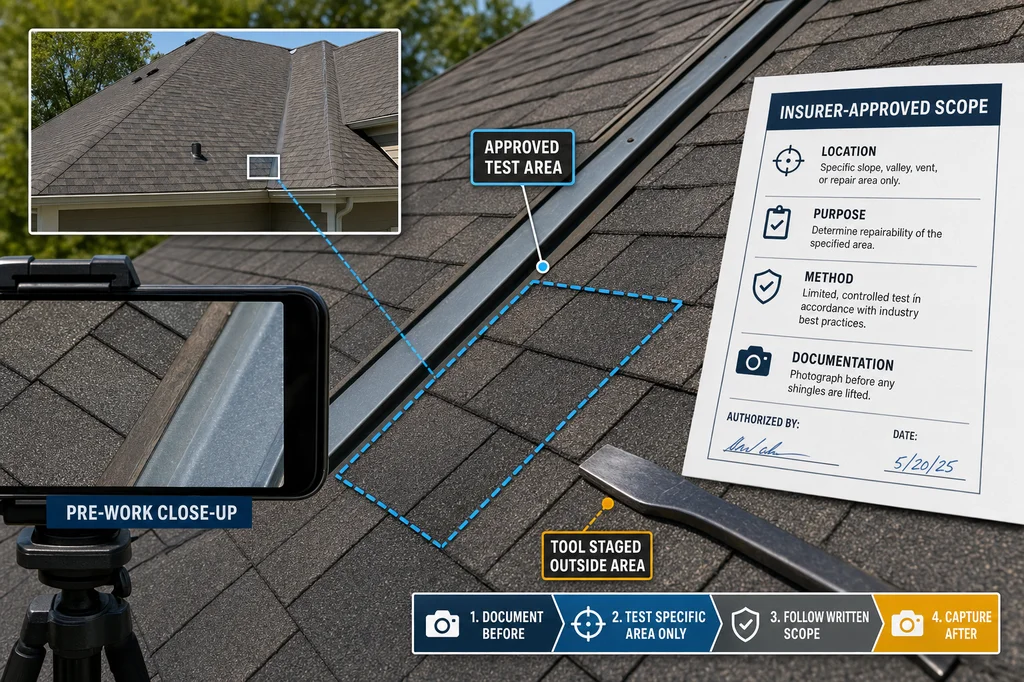
Castle Roofing fake-damage allegations are a warning to slow down before anyone lifts, pries, or removes roofing materials during a claim. Require close-up pre-work photos, a written reason for each test, and an insurer-approved scope before authorizing invasive roof testing that could create new damage.
Why invasive roof testing needs limits
A repairability test can be relevant when an insurer has approved a limited repair, but it is not a blank check to disturb shingles across the roof. The key distinction is whether a roofer is documenting an existing condition or creating a condition that later gets presented as claim damage.
One disputed example involved an Owens Corning shingle roof in high heat. A roofer used a flat bar to try to unseal shingles while discussing whether the roof could be repaired after State Farm had written for replacement of a front slope and valley metal. The resulting footage drew criticism because shingles appeared to tear or sustain damage as they were lifted.
For you, the practical issue is simple: a test that changes the roof also changes the evidence. Do not authorize broad exploratory work merely because someone believes a repair will be difficult. Make the proposed test, location, purpose, and expected outcome clear in writing before work starts.
Castle Roofing allegations make pre-work photos essential
Close-up photographs taken before testing give you a record of what the roof looked like before any tool touched it. That record is especially important where there is a dispute over whether damage was caused by wind, hail, aging, prior conditions, or the testing itself.
Four Castle Roofing Company employees were accused of damaging roofs to defraud insurers and homeowners. The allegations included that Paul Vor, described as a company vice president, trained three other men to create fake damage. All four were charged with grand theft, criminal use of personal identification, aggravated white-collar crime, and insurance fraud. Charges are allegations, not proof of guilt, but the case illustrates why homeowners should control access and documentation during claim-related roof work.
- Get wide and close views: Photos should show the full slope or roof feature, then close-ups of each claimed damaged area. This helps place a close-up mark, bruise, or tear in context.
- Capture the proposed test area first: If a shingle is going to be lifted to assess repairability, photograph its condition, surrounding shingles, and nearby flashing before the test.
- Keep the original files: Ask for the complete photo set rather than only selected images in a sales presentation or estimate.
- Document what changed: If materials crack, tear, or will not reseal during an authorized test, request photos immediately after the work and a written explanation of what occurred.
Match testing to the insurer's written scope
The insurer's estimate may identify a particular slope, valley, vent, or repair operation. A roofer should be able to explain how the proposed testing relates to that written scope instead of using the claim as a reason to manipulate unrelated areas.
In the disputed footage, the roofer argued that removing a valley component could require working with shingles that were tightly sealed and could be damaged during a repair. That can be a legitimate repairability question. It still does not establish that every shingle on a roof requires replacement. The evidence should show the original condition, the limited repair being evaluated, and why the stated scope can or cannot be completed without damage.
Send the contractor the insurer's scope before authorizing any invasive work. If the contractor believes the scope omits necessary operations, have them identify the exact line items and roof locations at issue. You can then decide whether to seek clarification from the insurer before the roof is disturbed.
What to put in writing before a repairability test
A short authorization protects you from misunderstandings and makes a later review easier. It should describe documentation and testing, not authorize an open-ended effort to find more claim damage.
- Name the roof area. State the slope, valley, vent, or other specific feature to be examined.
- State the purpose. For example, the purpose may be to evaluate whether the approved repair can be performed without damaging surrounding materials.
- Require before-and-after evidence. List the photos you expect, including close-ups and broader location shots.
- Set a stop point. Require the roofer to pause and contact you before expanding beyond the listed area or performing additional removal.
- Clarify payment. Know whether the testing is included in an estimate, charged separately, or dependent on later approval. Review your contract and insurance policy for how any claim-related work is handled.
This does not decide insurance coverage or fault. It gives you a cleaner record if the contractor, adjuster, or insurer later reaches different conclusions about what the roof showed before work began.
Questions that expose a risky roof-testing proposal
A reputable explanation should be specific enough that you can understand where the work will occur and what evidence it is meant to produce. Vague claims that a roof is “unrepairable” without location-specific support deserve a pause.
- Which exact shingles or components do you need to test, and why those locations?
- What existing damage do your close-up photos show before any shingles are lifted?
- Which part of the insurer's written scope is this test evaluating?
- What tool and method will be used, and what will you do if the test damages material?
- Will you stop for my approval before testing another area or adding work to the claim?
- Can you provide the complete dated photo set and a written summary of your findings?
If the contractor cannot answer those questions plainly, do not let urgency substitute for documentation. For a second opinion on claim-related roof work, Directorii lists verified contractors.
What to do if testing has already damaged your roof
Act quickly to preserve the condition of the roof and the paperwork, but avoid making assumptions about who is responsible. Take ground-level photos where possible, save every estimate and message, and write down the date, people present, areas touched, and work performed.
Request a written account from the contractor describing the purpose of the work, the roof's pre-test condition, and every material affected. Provide relevant records to your insurer and follow your policy's reporting requirements. If there is a disagreement about coverage, payment, or alleged misconduct, review your contract and consult a licensed insurance or legal professional as appropriate in your state.
Source: Roof Damage or Scam? Florida Insurance Crisis, H2B Visa increases, $3mm embezzlement, Jared Jones
FAQ
What are the Castle Roofing fake-damage allegations?
Four Castle Roofing Company employees were accused of damaging roofs to defraud insurance companies and homeowners. The allegations included that a vice president trained three other men to create fake damage. They were charged with grand theft, criminal use of personal identification, aggravated white-collar crime, and insurance fraud. Charges are allegations and do not establish guilt.
Should I allow a roofer to lift shingles for a repairability test?
You may allow limited testing when its purpose and location are documented, but do not approve open-ended roof manipulation. Ask for close-up photos before and after the test, a written explanation of the specific repair issue being evaluated, and a stop point before the roofer expands into another area.
Why do I need photos before invasive roof testing?
Pre-work photos establish the roof’s visible condition before shingles, flashing, or other materials are disturbed. They can help separate pre-existing conditions from changes that occurred during testing. Request both close-up images and wider photos that show where each claimed damaged area is located on the roof.
Can a tightly sealed shingle make a roof repair difficult?
Yes, tightly sealed shingles can raise a repairability question when a contractor needs to work around a repair area. That does not automatically mean the entire roof needs replacement. The contractor should connect the concern to a specific insurer-approved repair, document the materials before testing, and explain the outcome in writing.
What should I do if roof testing creates new damage?
Preserve records before deciding what happened or who is responsible. Save photos, messages, estimates, and the written authorization, then request a detailed written account of the work performed and materials affected. Notify your insurer according to your policy requirements and consult a licensed professional if coverage or contract responsibility is disputed.