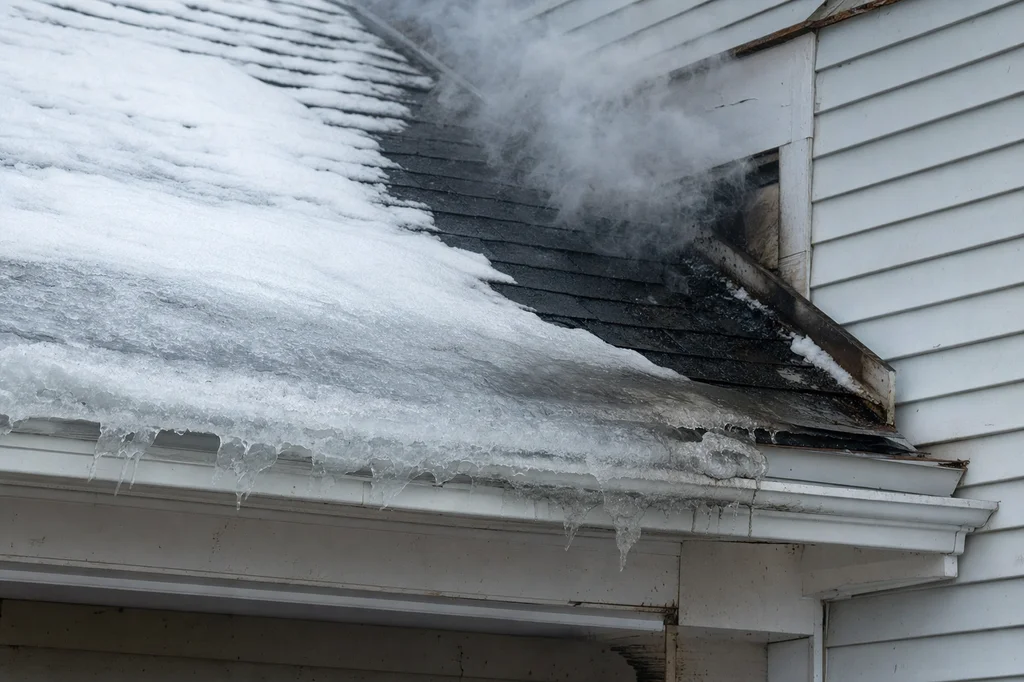
Using a blowtorch to melt a roof ice dam can ignite the roof assembly and send fire into the attic. In Milton, Massachusetts, a homeowner used a torch near a front roof corner, and firefighters found the attic fully involved. Ice-dam removal calls for a professional response, not open flame near shingles, wood, trim, or insulation.
Why heat can travel past the ice you can see
A torch does not heat only the visible ice. It puts intense open flame and heat next to asphalt shingles and the layers beneath them, including wood roof decking and materials around trim.
Snow and ice can insulate the area being heated. That means heat may build below the frozen surface rather than escaping as quickly as you expect. Behind exterior trim and under the roof covering, insulation and plastic materials can add fuel once a fire starts. The danger is not limited to a scorched shingle; fire can move into concealed spaces before it is obvious from outside.
In the Milton fire, the homeowner was seen with a torch before the fire response. Firefighters initially pulled off a gutter on one side of the building while expecting a smaller fire, then found the entire attic involved. A small attempt to clear ice can become a structure fire in minutes.
What the Milton attic fire shows about ice-dam risk
An ice dam is frustrating, but it is not a reason to bring open flame onto a roof. The Milton fire spread quickly through the attic, and firefighters worked for hours in frigid conditions with help from surrounding towns.
Do not judge the risk by whether snow is still present or whether the roof surface looks wet. Snow can conceal the area being heated, while roof and attic materials remain vulnerable underneath.
What to do instead of using a blowtorch on an ice dam
Keep people off the roof and arrange professional ice-dam removal. Firefighters responding to the Milton incident urged homeowners to have a professional company handle ice dams rather than risking a fall or a fire.
When you contact a roofing or ice-dam-removal company, describe the symptoms rather than trying to diagnose the roof yourself. Mention where ice is accumulating and whether water is appearing indoors. A qualified professional can determine the appropriate next step.
- Keep open flame away from the roof. A torch can heat materials hidden below ice and snow.
- Do not climb onto the roof to chip or melt the ice. Winter roof conditions can create a fall hazard.
- Document visible interior water or exterior buildup from the ground. Photos can help a professional understand the urgency without putting you on the roof.
- Call for emergency help promptly if you see smoke or smell burning. A concealed attic fire can expand beyond the original roof corner.
Directorii lists verified contractors.
When smoke or fire follows an attempted ice removal
Leave the response to emergency personnel if you see smoke, flames, or signs that heat has entered the building. Do not return to the roof edge, attic, or other potentially affected area to check how far the fire has gone.
After the emergency is controlled, document the condition from safe locations and contact appropriate professionals for the roof and other affected building areas. Coverage and repair questions can depend on your policy and circumstances, so confirm insurance questions with your insurer.
Source: Blow Torch Sets Roof on Fire
FAQ
Can a blowtorch used on an ice dam start an attic fire?
Yes. In the Milton incident, a homeowner used a torch near a front roof corner, and firefighters found the attic fully involved. Heat can reach wood, trim, insulation, and plastic materials beneath or behind the visible roof surface.
Why are snow and ice not a safe barrier when using a torch?
Snow and ice can insulate the area being heated, allowing heat to build underneath more than you may expect. A surface that still looks icy does not show whether heat has reached roof decking, trim, or materials inside the attic assembly.
What should I do if I have a severe ice dam on my roof?
Contact a professional company for ice-dam removal rather than using open flame or climbing onto the roof. Describe the location of the buildup and any indoor water signs from safe ground-level or indoor locations.
Should I use a torch on an ice dam if water is leaking inside?
No. Using a torch can add a fire emergency to an existing water problem. Treat indoor water as a reason to contact a qualified professional promptly, not as a reason to use open flame on the roof.