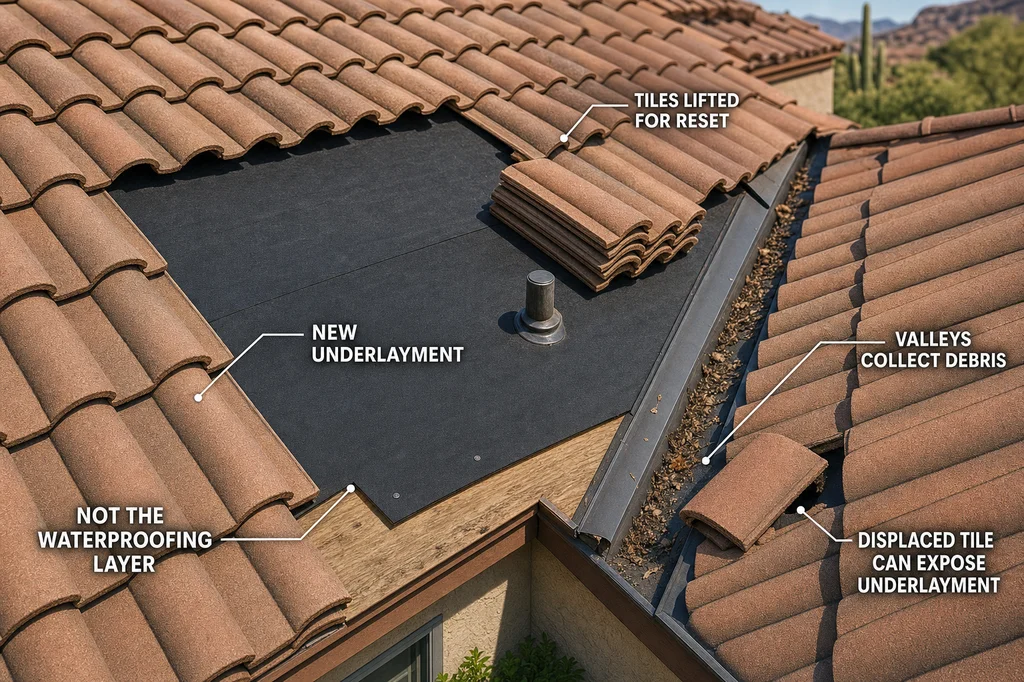
Arizona tile underlayment work typically involves lifting and resetting the existing tile, with breakage and discontinued-tile matching creating important planning risks. Annual valley maintenance can also help catch debris buildup and displaced tile before they contribute to leaks.
What sits beneath the tile—and why it fails
Tile protects the roof assembly, but the underlayment below it is the layer that can deteriorate and allow water in. To replace that layer, a roofing crew generally has to remove and stack the existing tile, install the new underlayment, and reset the tile.
This is more involved than replacing exposed roofing material because every slope has to be opened, dried in, and put back together without creating new fit problems. Crews may work through portions of a slope so they can protect the roof before moving on. The homeowner takeaway is simple: the visible tile is not the whole roof system, and a tile roof can need major work even when much of the tile still looks usable.
Leaks may show up around penetrations and vulnerable roof areas as the underlayment ages. Skylights, pipes, valleys, and areas where tile has shifted deserve close attention. A roof evaluation should distinguish between a localized issue and underlayment deterioration across the roof rather than treating every leak as the same problem.
Why matching discontinued tile can complicate the project
Moving old tile creates a real risk of breakage, and replacement pieces may be hard to match. Compatibility is not the same as an exact visual match.
Some tile may be held with mastic or have cuts made for a particular location. Tile also depends on the existing layout, lines, and battens. If the reset does not align with the original arrangement, pieces may not sit or fit as they did before. That can leave a contractor needing replacement material even if the original plan was to reuse most of the roof tile.
Many tile products installed decades ago are discontinued. Salvage yards may have some material, but available stock can be limited after years of tile roofing work in the area. A contractor may locate a compatible tile that functions on the roof while still being unable to deliver an exact color, profile, or manufacturer match.
- Ask whether your tile has been identified. A clear identification effort helps set expectations about replacement availability before work begins.
- Ask how breakage is handled in the written scope. You need to know whether matching tile is included, excluded, or subject to availability.
- Ask where nonmatching replacement tile could appear. A compatible substitute may be more noticeable in highly visible areas.
- Ask how the crew will handle tile with mastic, special cuts, and difficult slopes. These details can affect both the reset process and the amount of replacement material needed.
Do not assume that a contractor can buy an exact replacement tile because a similar-looking product exists. The meaningful decision is whether you can accept a compatible substitute if an exact match cannot be found.
Annual valley service can prevent avoidable underlayment damage
Valleys collect leaves, dirt, and debris that can hold back water and stress the underlayment below the tile. Annual professional maintenance can also spot tiles that have moved out of place before exposed underlayment turns into a larger problem.
Arizona roofs can accumulate debris even where there are few trees. Dust storms can add dirt and silt, and debris can build in valleys and gutters. Water that backs up in a valley may compromise aging underlayment. A tile that slides out of position can leave part of that underlayment exposed for an extended period.
You do not need to get on the roof to monitor these issues. From the ground, watch for obvious tile gaps, debris collecting at roof edges, stains below a valley, or water spilling where it should drain. Have a qualified roofing professional inspect and clear roof valleys as part of a regular maintenance visit. If your home has gutters, include them in that service because dirt and silt can cause overflowing even without heavy leaf buildup.
Will insurance pay for an aging tile roof leak?
Coverage for a tile-roof leak can depend on the cause and the policy. Age-related wear and deterioration may be treated differently from sudden damage caused by wind or a falling tree branch.
A leak inside the home and damage to the roof are also not necessarily handled the same way. Do not assume that an interior water stain means the insurer will fund underlayment replacement. On the other hand, wind that lifts tiles or a branch impact may create a claim path depending on the policy and documented damage.
Discontinued tile can add complexity after a covered event because the repair may require material identification. ITEL was identified as a service used to identify roofing materials, including concrete tile, when an insurer requests documentation. That identification can help establish whether the original tile remains in production and whether a replacement is available. It does not guarantee coverage or a full roof replacement.
Before filing, read your policy and document the date and apparent cause of the damage. For coverage questions, confirm the details with your insurer.
What the underlayment replacement scope should spell out
A strong scope makes the lift-and-reset process and the tile-matching risk visible before work starts. It should not leave you guessing whether a changed tile layout, breakage, or hidden roof condition will become a dispute later.
Review the proposal for the specific roof areas being addressed, how existing tile will be lifted and reset, the underlayment being installed, and how the contractor plans to address penetrations and valleys. Owens Corning markets P30 as a self-adhering high-temperature underlayment for tile roofs; if a proposal names it or another product, have the contractor identify exactly where it will be used and why it suits your roof assembly.
Also look for a plain explanation of replacement-tile allowances, whether exact matching is promised, and what happens if matching stock cannot be sourced. This is where a low estimate can become costly: an incomplete scope may not account for the labor and material uncertainty involved in resetting older tile.
Directorii lists verified contractors.
Source: Arizona Roofing Market
FAQ
What does lift-and-reset mean on an Arizona tile roof?
Lift-and-reset means the existing roof tile is removed and stacked so the underlayment beneath it can be replaced, then the tile is installed again. This is often necessary because the underlayment sits below the visible tile. The process can require replacement pieces when old tile breaks or no longer fits the original layout.
Can I get an exact match for discontinued roof tile?
You may not be able to get an exact match for discontinued roof tile. Salvage sources may have limited inventory, and a replacement may be compatible without matching the original color, profile, or manufacturer exactly. Have the proposal address how matching will be attempted and where substitute tile may be used if needed.
How can annual valley maintenance help a tile roof?
Annual valley maintenance can remove debris that holds back water and can expose tiles that have shifted out of place. Backed-up water may compromise underlayment, while a displaced tile can leave underlayment exposed. A roofing professional can clear valleys and check for misplaced tile without requiring you to walk on the roof.
Will insurance cover old underlayment that starts leaking?
Insurance coverage for leaking underlayment depends on the cause of damage and the terms of your policy. Age-related deterioration may be handled differently than tile damage caused by wind or a falling branch. An interior leak may also be evaluated separately from the roof itself, so review your policy and confirm coverage with your insurer.
What should an Arizona tile roof replacement proposal include?
The proposal should identify the roof areas included, the lift-and-reset approach, the underlayment product, and how valleys and penetrations will be addressed. It should also explain the plan for broken tile, special cuts, and discontinued material. Most importantly, it should state whether an exact tile match is available or only a compatible substitute.