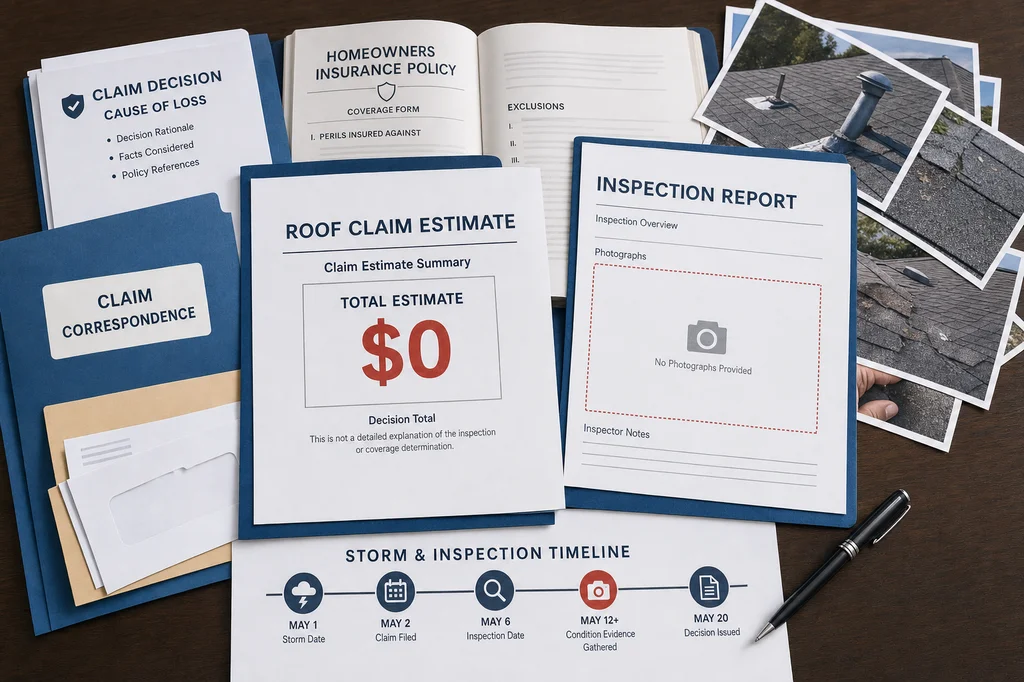
If you are an Allstate policyholder with a zero-dollar wind or hail estimate, review the inspection record before treating the decision as the final word. Richard Hill’s federal lawsuit alleges an initial report lacked roof photos, while later documentation identified hail impacts and water intrusion. Allegations are not findings.
Start with the inspection record, not the estimate total
A $0 estimate may reflect the insurer’s conclusion that no covered repair is owed, but the estimate total alone does not show what was inspected or why damage was ruled out. In Hill’s complaint, the first claim was attributed to normal wear and tear after a storm in 2024.
Get a complete copy of the claim file items that relate to the decision. Focus on the adjuster’s estimate, inspection report, photographs, written explanation of the cause-of-loss decision, and correspondence about the claim. A missing photo does not establish that a roof was damaged or that coverage applies. It can, however, make it harder to understand whether the inspection record supports the written conclusion.
- Compare the stated damage cause with the report. If wear and tear is cited, identify where that conclusion is explained.
- Check what areas were documented. Hill’s complaint specifically raises the absence of roof photos in an initial report.
- Keep storm-related records together. Save the estimate, denial or decision letter, photos, and communications in one file.
- Read your policy alongside the decision letter. Coverage depends on the policy language, facts of the loss, and applicable state rules.
Why the alleged missing roof photos matter
Hill alleges that an Allstate agent questioned the first inspection because the adjuster report did not include roof photos. The complaint also alleges that a later public adjuster documented hail impacts and water intrusion around the property after another storm.
For a homeowner, the practical point is not that every inspection must produce a certain claim result. It is that a decision should be traceable to a record. Photos can show the conditions an inspector relied on, identify the locations reviewed, and help distinguish one claimed event from another. If the file contains little visual documentation, request clarification in writing rather than relying on a verbal summary.
Keep a later storm separate from an earlier claim
Multiple storms can create a dispute over timing. Hill’s complaint alleges that, after the later storm, documentation supported an estimate of $130,000, while Allstate denied the claim on the basis that the damage was the same damage involved in the earlier claim.
That kind of disagreement turns on documentation and policy terms, not simply on the fact that two estimates differ. Make a simple timeline with each storm date, the date you reported it, who inspected, the written claim decision, and any later evidence of hail impacts or water intrusion. If you obtain an independent condition assessment, preserve the report and its photos with the date it was prepared.
Do not assume a roofer, public adjuster, or insurer representative can make the final legal interpretation of your policy. If you are considering a public adjuster, confirm that person’s licensing and role in your state. For coverage or claim-rights questions, consult a qualified insurance professional, attorney, or your state insurance department.
What to request after an Allstate zero-dollar estimate
Make one focused written request for the records and explanation needed to evaluate the decision. Clear requests create a better paper trail than a general complaint that the estimate seems too low.
- Ask for the complete estimate and the written basis for the $0 result.
- Request the inspection report and all photos taken or relied upon during the inspection.
- Ask which observed conditions were attributed to wear and tear, prior damage, or the reported storm.
- Ask whether the decision relies on damage from an earlier claim and, if so, request the records used for that comparison.
- Ask what policy provisions were applied to the decision and read those provisions in your own policy.
If a roof-condition opinion is needed, hire a qualified roofing professional to document visible conditions and provide a written scope. That professional can help create an independent property record, but should not promise claim approval or tell you what your insurer will cover.
Directorii lists verified contractors.
What the federal allegations do—and do not—show
Hill’s lawsuit alleges that Allstate’s Claims Core Process Redesign Program, or CCPR, was designed to reduce payouts through claim-handling practices. It also references McKenzie and alleges adjusters were encouraged to apply exclusions without factual support. Those are allegations in a lawsuit, not proven facts.
The complaint’s broader theory may provide context for homeowners who feel a claim file is incomplete, but it does not determine the outcome of any individual wind or hail claim. Your decision should rest on your policy, the condition of your property, the inspection record, and advice from appropriately licensed professionals.
Source: Allstate Accused of Secret Claims Scheme: New Federal Lawsuit Raises Fraud Questions
FAQ
What should I review after an Allstate zero-dollar roof estimate?
Review the written estimate, inspection report, photographs, decision letter, and correspondence about the claim. Also compare the stated reason for the decision with the relevant policy language. A $0 total does not by itself show which conditions were observed or how the insurer reached its conclusion.
Should an Allstate roof inspection report include roof photos?
Roof photos can be useful because they show the conditions documented during an inspection and the areas reviewed. Richard Hill’s complaint alleges that an initial report lacked roof photos, but an absent photo does not by itself prove damage or coverage. Request the inspection materials and written explanation for the decision.
Can a later hailstorm be treated as damage from an earlier claim?
It can become a point of dispute when storms occur at different times and the insurer concludes the conditions are not new. Keep a dated timeline of each storm, claim, inspection, estimate, and property record. Whether damage is covered depends on the policy, the facts, and applicable state rules.
What can a roofer do after my wind or hail claim is denied?
A qualified roofing professional can document visible roof conditions and prepare a written scope of observed work. That record may help you understand the property condition, but a roofer cannot decide insurance coverage or guarantee that an insurer will change its decision. Use the report alongside your policy and claim documents.
Should I hire a public adjuster after a zero-dollar claim decision?
A public adjuster may be an option if you want help documenting and presenting a property claim, but their role and licensing requirements vary by state. Confirm the person’s credentials and agreement before hiring. For legal or policy-interpretation questions, consult a qualified attorney, insurance professional, or state insurance department.