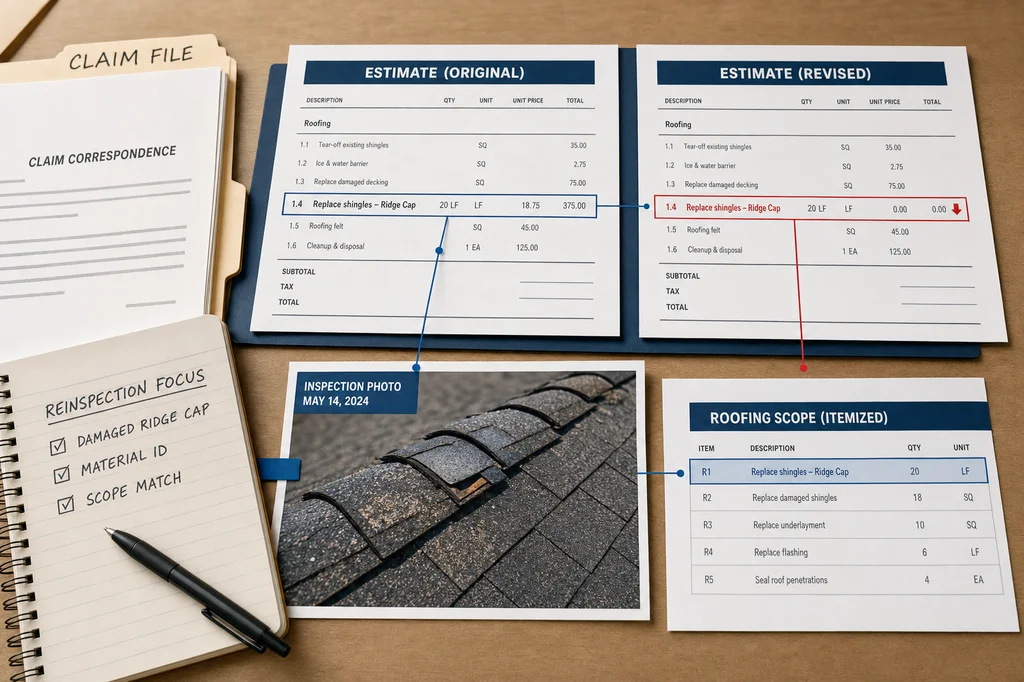
An Allstate storm-loss estimate that changes after inspection may reflect a disagreement about what photographs show, what material is present, or whether a condition belongs in the repair scope. A focused reinspection request starts with the specific item that changed—not just the final total.
Why the Senate testimony matters when an estimate changes
At a Senate hearing about storm claims, adjusters connected to an Allstate claim testified that their findings were reduced or changed during review. One adjuster said a reviewer who had not visited the property rejected his identification of hail damage in photographs, including additional photographs he submitted after returning to the property. He also testified that material identifications could be changed during review.
Allstate disputed that this was its process. Its representative said estimates are reviewed, often for authority requests, and disagreed with testimony that adjusters were directed to make factually inaccurate changes.
The hearing does not determine any individual claim. It does show why a homeowner should identify the exact point of disagreement when an estimate changes:
- Whether marks identified in photos are hail damage.
- Whether a reviewer made the decision from photos, an on-site inspection, or both.
- Whether the material was identified correctly.
- Whether an item is considered damaged, cosmetic, excluded, or outside the approved scope.
Start with the estimate versions, not the dollar total
Save the initial estimate, every revised estimate, inspection photos, correspondence, and written coverage decisions. Compare the versions line by line. Mark items that were removed, reduced, or described differently.
Then ask for the written basis for each disputed item. A useful request is specific: identify the roof area, photo, material, or line item and ask why its description or amount changed. That makes it easier to distinguish a disagreement about damage from one about scope or policy coverage.
The Miguel claim shows why “cosmetic” needs a precise explanation
The hearing included the claim of Natalia Miguel, whose home was struck by a massive tree during Hurricane Helen. Testimony described an estimate that fell from almost half a million dollars to $100,000.
Allstate’s representative said roughly 70% of the difference involved replacement of undamaged bricks for appearance rather than structural damage. The representative also challenged a higher public-adjuster estimate. The account included an engineering firm and a requested reinspection.
For a homeowner, the practical lesson is to avoid arguing only about a final number. Ask whether each disputed item is said to be undamaged, cosmetic, excluded, or outside the approved repair scope. Read that answer alongside the relevant photos, estimate line items, and any complete professional reports.
Build a reinspection file around observable disagreements
A reinspection request is more useful when it identifies what should be examined and why. Keep a dated file with the insurer’s estimates, claim correspondence, inspection notices, photos, reports, itemized repair scopes, and records of temporary protection work.
Do not climb onto a roof or attempt to document high or unsafe areas yourself. An independent roofing professional can document observed roof conditions and provide an itemized repair scope. Keep physical findings separate from insurance conclusions: a roofing scope may help describe conditions, but it does not decide policy coverage.
Make the reinspection request specific
Make the request in writing. Include the claim number, property address, date of loss, the exact locations or estimate items at issue, and the documents you are providing. Instead of asking generally for a higher estimate, focus on the disputed finding.
- Which line items changed after the field inspection, and what was the reason for each change?
- Was the hail finding evaluated from photographs, an on-site inspection, or both?
- What material identification was used for the disputed item, and what supports that identification?
- If an item is called cosmetic, is it considered undamaged or simply outside the approved repair scope?
- What additional photos, reports, or other documentation will be considered in the reinspection or supplemental review?
Keep copies of everything sent and received. A written record is particularly helpful when the dispute concerns a photo-based decision, a hail identification, a material description, or an allegedly cosmetic condition.
Use independent roof documentation carefully
Independent roof findings can help a homeowner identify visible conditions or repair work that may not appear in an insurance scope. They should not be treated as a promise that an insurer will change its decision. Choose a contractor who provides a clear description of observed conditions and an itemized scope rather than a promised claim result. Directorii lists verified contractors.
For policy interpretation, claim-handling concerns, or questions about a public adjuster, confirm options with a qualified professional and, where appropriate, the state insurance department or legal counsel.
Keep the disagreement narrow and documented
The testimony raised competing accounts of how Allstate estimate reviews work. For a homeowner facing a changed estimate, the useful response is concrete: preserve the estimate versions, match evidence to each disputed finding, and request review of the specific damage, material, or scope item at issue.
Source: Senate hearing coverage on Allstate and State Farm storm claims
FAQ
What should I review if my Allstate estimate changed after inspection?
Compare the earlier and later estimates line by line. Save the related photos, correspondence, and written decisions, then identify whether the change involves a damage finding, material identification, repair scope, or coverage position. Request a written explanation for the specific changed items.
How can I question a photo-based hail decision?
Ask whether the disputed condition was evaluated from photographs, an on-site inspection, or both. Identify the roof area and photos at issue, and provide organized documentation of the observed condition. The Senate testimony included an adjuster who said a reviewer rejected his hail identification from photos; Allstate disputed that adjusters were directed to make inaccurate changes.
What should I ask when damage is called cosmetic?
Ask whether the item is considered undamaged, cosmetic, excluded, or outside the approved repair scope. In the Miguel claim discussed at the hearing, Allstate said much of the estimate difference involved replacement of undamaged bricks for appearance. The answer for any claim depends on the particular item and policy.
What should be included in a reinspection request?
Include the claim number, property address, date of loss, disputed estimate line items or locations, and the evidence attached. Ask targeted questions about changed findings, photo review, hail identification, material identification, and the reason an item was omitted or reduced.
Can a roofing professional decide what insurance will pay?
No. A roofing professional can document observed roof conditions and provide an itemized repair scope, but insurance coverage and claim payment decisions depend on the policy and claim facts. Do not climb onto the roof yourself to gather evidence from unsafe areas.