Roof policy terms 101 starts with understanding actual cash value, replacement cost value, depreciation language, and your deductible before treating the first claim check as the full settlement. Review those terms before committing claim funds to a roof replacement or assuming the insurer’s first estimate covers every needed item.
Read the loss-settlement language before relying on labels
ACV and RCV are different ways a policy can value a covered roof loss. The difference matters because an older roof may receive a substantially smaller payment under actual cash value coverage.
Actual cash value (ACV) generally reflects a depreciated value. The policy calculation may account for the roof’s age and condition, then subtract your deductible. For example, a roof with a stated replacement amount of $20,000 could receive an ACV payment closer to $10,000 if age-related depreciation reduced its value. That example is illustrative, not a formula that applies to every policy.
Replacement cost value (RCV) is commonly used to describe coverage intended to pay the replacement cost, subject to the policy terms and deductible. The claim may not arrive in one payment. Some policies hold back depreciation until qualifying work is completed and documentation is submitted.
The practical point is simple: do not judge coverage by a label alone. A policy marketed with replacement-cost language may still contain a valuation factor, limitation, or depreciation provision that changes the payment. Read the declarations page and the loss-settlement language together. If wording is unclear, have your insurance agent or broker explain how the policy applies to a roof loss.
Why the first insurance check may not be the full settlement
A first payment can represent actual cash value rather than the full replacement amount. If depreciation is recoverable under your policy, additional funds may be available after the project is completed in the way the policy requires.
Recoverable depreciation is the portion withheld initially that may be paid later after repair or replacement. It is often shown on the insurer’s estimate rather than on the check itself. The second payment can be meaningful, particularly where the roof has substantial age-related depreciation, but the amount and conditions depend on the policy and claim paperwork.
Non-recoverable depreciation is depreciation the policy does not pay back. This is a key distinction for homeowners with ACV coverage: the depreciation may be part of the permanent gap between the roof’s replacement cost and the claim payment.
- Find the loss-settlement section. Look for whether the policy uses actual cash value, replacement cost, or another stated method.
- Compare the estimate with the check. Identify the replacement cost, depreciation, deductible, and net claim payment shown by the carrier.
- Check for conditions on withheld depreciation. The paperwork may describe what must be completed or submitted before a later payment is considered.
- Keep project records. A written contract, invoices, photos, and proof of payment can matter when the insurer requests documentation.
Do this before spending the first check. It helps you see whether the money is meant to fund the entire job or only the initial portion of a claim settlement.
Your deductible is separate from the insurer’s payment
Your deductible is the part of a covered loss that remains your responsibility under the policy. It is ordinarily reflected as a subtraction from the claim amount, not as a charge the insurer has already paid to the roofing company.
Deductibles can be fixed amounts or calculated from policy terms. In Texas, percentage deductibles can become large as home values rise. That does not establish a rule for every state or policy, but it is a reason to confirm the exact deductible before filing a claim or signing a contract.
Be cautious if a roofer promises to “cover,” “eat,” or quietly offset your deductible through a vague credit, yard sign arrangement, or referral arrangement. Rules on deductible waivers and insurance billing vary by state, contract, and policy. Ask for a written explanation of every credit and what you will actually pay. If the arrangement is unclear, contact your insurer, state insurance department, or an attorney before proceeding.
Supplements can address items missing from an initial estimate
A supplement is a request for additional claim payment when the initial estimate omits needed work or when conditions become clear during the project. It is not automatically evidence that a contractor is overcharging.
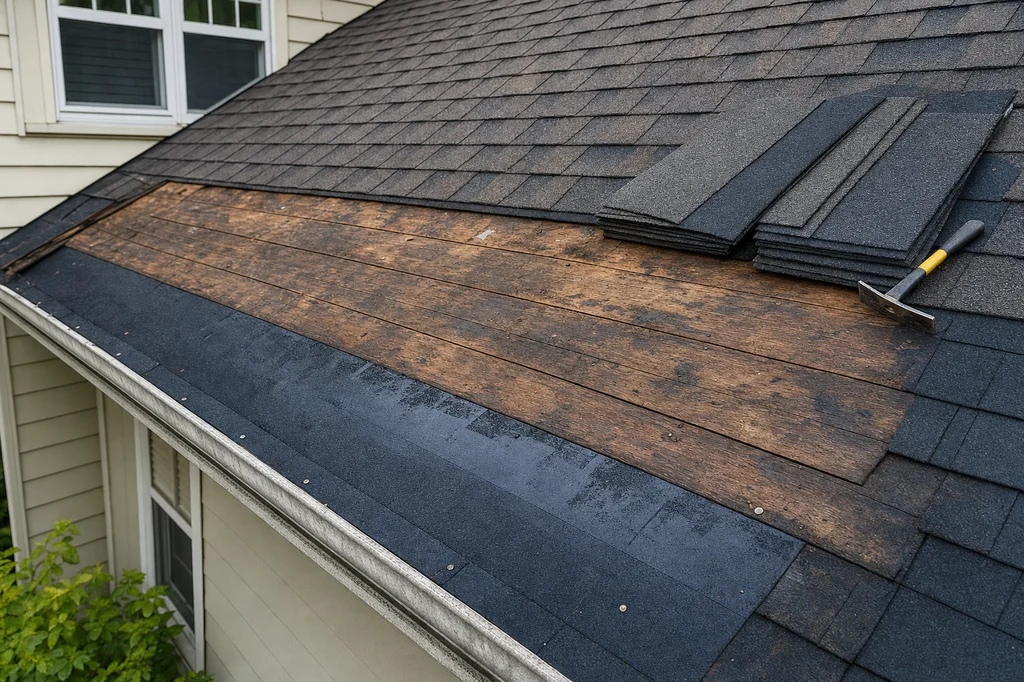
Initial estimates can miss items, especially after widespread storm damage when adjusters are working quickly. For example, an estimate may increase after a missing ice-and-water line item is identified. Some conditions, including compromised decking, may not be visible until existing roofing is removed.
A credible supplement should tie the requested work to documented conditions, the repair scope, and applicable local requirements. It should not be a blank demand for more money. Your roofer can prepare repair documentation, but insurance coverage decisions belong to the carrier, and local code questions should be confirmed with a licensed professional or building department.
Before authorizing work, compare the contractor’s written scope with the insurer’s estimate. Focus on what is included, what is excluded, and which items may require further documentation. That is more useful than comparing only the total dollar figure.
How to respond to a denial or a disputed roof scope
If you believe storm damage or necessary repair items were missed, request a reinspection through the insurer and provide organized documentation. A second review may identify issues that were not captured during the first inspection, but it does not guarantee coverage.
Choose a roofing contractor who can explain the physical condition, prepare a clear scope, and separate construction facts from insurance or legal advice. A roofer should not present themselves as a public adjuster or attorney. If the dispute becomes a coverage or legal question, consider a qualified public adjuster or attorney where permitted, and verify their role under your state’s rules.
Do not hand over an insurance check to a contractor you have not vetted. Review the payment schedule, scope, and change-order process before releasing funds. Directorii lists verified contractors.
Keep copies of every estimate, carrier letter, check stub, contract, invoice, and photo. Those records make it easier to track whether depreciation, supplements, and deductible amounts have been handled as the policy and contract require.
Source: Morning Brew Show: Denied Claims 101
FAQ
What is the main difference between ACV and RCV for a roof claim?
ACV generally pays a depreciated value for the damaged roof, while RCV is commonly used for coverage intended to pay replacement cost subject to policy terms and your deductible. With some RCV policies, depreciation is held back initially and may be paid after qualifying repair or replacement work is completed.
Can my first roof insurance check be less than the full claim amount?
Yes, the first check can be less than the full replacement amount when the carrier deducts depreciation or applies your deductible. Review the estimate for recoverable depreciation, non-recoverable depreciation, and any conditions for later payment rather than assuming the first check is the entire settlement.
What is recoverable depreciation on a roof insurance estimate?
Recoverable depreciation is money withheld from the initial payment that may be available after the roof work is completed and the policy’s requirements are met. The claim paperwork should show whether depreciation is recoverable and what records the insurer wants before considering an additional payment.
Should I let a roofer waive my insurance deductible?
Treat a deductible-waiver offer carefully and get every credit or discount in writing. Deductible and insurance-billing rules can vary by state, policy, and contract, so confirm an unclear arrangement with your insurer, state insurance department, or an attorney rather than relying on a verbal promise.
Can a roofer submit a supplement after the insurance estimate is written?
A roofer can document repair items that were omitted from the initial estimate or conditions that become visible during the project, such as potentially compromised decking. The insurer decides whether the requested amount is covered, so the supplement should identify the condition and support the proposed repair scope.
What should I do if my roof claim is denied but my roofer found damage?
Request a reinspection through your insurer and submit organized documentation supporting the concern. A second review can identify items missed during an earlier inspection, but it does not assure approval. For a coverage or legal dispute, consider a qualified public adjuster or attorney where permitted in your state.