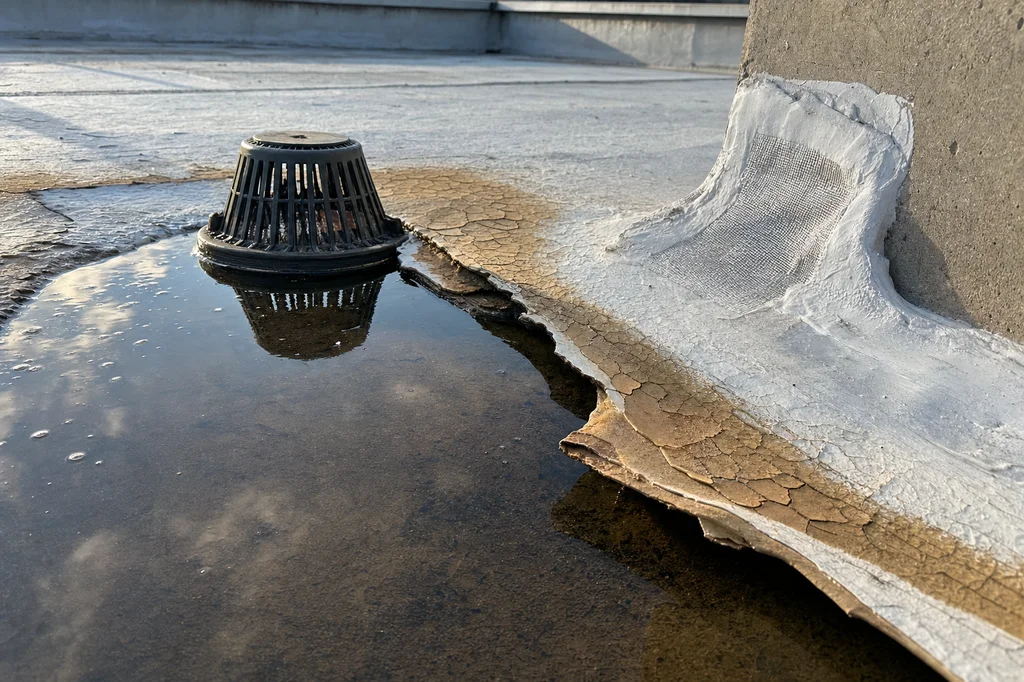
Before approving acrylic for a flat roof, focus on where water collects, how fabric-reinforced areas will dry before dew arrives, and whether the roof includes foam or black EPDM. These details can shape how an acrylic coating performs over time.
Start at the drains, not the center of the roof
Acrylic is water-based. The reported concern is not merely water standing on a coated surface, but the outdoor exposure that comes with sun, rain, dirt, and foot traffic. Where water remains on acrylic, dirt can build up; the coating may then break down and develop cracks.
Drain areas deserve close attention. As drains refill, water can sit at the edge where the acrylic stops. One reported failure path is water working beneath that edge, loosening the acrylic, and spreading beneath more of the coating system over time.
Acrylic needs a route for water to drain away. A sloped metal roof was described as a different application from a flat roof with persistent standing water.
Fabric creates a cure-time concern
Fabric may be installed over seams or across an entire roof to achieve the desired elongation. A layer of acrylic, fabric, and another acrylic layer makes a thicker assembly that must dry completely.
Dew before full cure is the specific concern. Because acrylic is permeable, moisture can enter the layered assembly after sunset. The reported result is lost adhesion and an area that does not fully cure. Hot daytime weather alone does not mean a fabric-reinforced section will be cured before dew arrives.
Signs of acrylic breakdown
A brown, peeling, chipping, or snakeskin-like surface was identified as a visible sign of acrylic deterioration. Those conditions do not establish a single cause, but they are consistent with repeated water exposure, ponding, and moisture that does not fully dry out.
Applying more acrylic was not presented as a simple fix. The reported concern is that thicker acrylic can hold more water. If water gets below the coating and cannot completely dry, the coating may continue to break down.
Foam coated with acrylic was also identified as a concern. At persistent ponding areas, water absorbed through the acrylic may reach the foam and remain there, contributing to breakdown beneath the coating.
Black EPDM and brown bleed-through
On black EPDM, acrylic can bleed through and turn brown. In the applicator's reported experience, using fabric only at seams left the remaining EPDM field vulnerable to that discoloration. He reported that roughly three gallons per square was needed to eliminate bleed-through on black EPDM; this is an applicator observation, not a universal specification.
Approval checkpoint
- Ponding: Identify water that remains around drains and at coating edges.
- Fabric and dew: Match the acrylic-and-fabric scope to sufficient dry time before dew or rain.
- Foam: Note persistent ponding areas where absorbed water could reach foam beneath the coating.
- Black EPDM: Account for possible brown bleed-through and discuss the reported coverage needed to address it.
These points reflect an applicator's reported field observations rather than universal manufacturer findings. Address the water and cure paths specific to the roof before relying on acrylic as a long-term flat-roof solution. Directorii lists verified contractors.
Source: Roofing expert explains why not to use acrylics on flat roofs
FAQ
Why is ponding water a concern for acrylic on a flat roof?
The reported concern is that standing water can collect dirt and contribute to acrylic breakdown and cracking. At drains, water can sit at a coating edge, work underneath it, and loosen adhesion.
Why does dew matter when acrylic is installed with fabric?
Acrylic and fabric create a thicker layered assembly that needs to dry completely. If dew arrives before cure is complete, moisture can enter the permeable coating, interfere with adhesion, and leave that area unable to fully cure.
What can a snakeskin-like acrylic surface mean?
A brown, peeling, chipping, or snakeskin-like finish was identified as a visible sign of acrylic deterioration. It does not identify one cause by itself, but it is consistent with water exposure and incomplete drying concerns.
What is the reported concern with acrylic over foam?
At a ponding area, water absorbed through acrylic may reach the foam and remain there. The reported concern is that this retained water can contribute to breakdown beneath the coating.
Why can acrylic look brown on black EPDM?
Acrylic over black EPDM can bleed through and appear brown. In the applicator's reported experience, fabric used only at seams did not protect the remaining EPDM field from this appearance issue, and roughly three gallons per square was needed to eliminate the bleed-through.