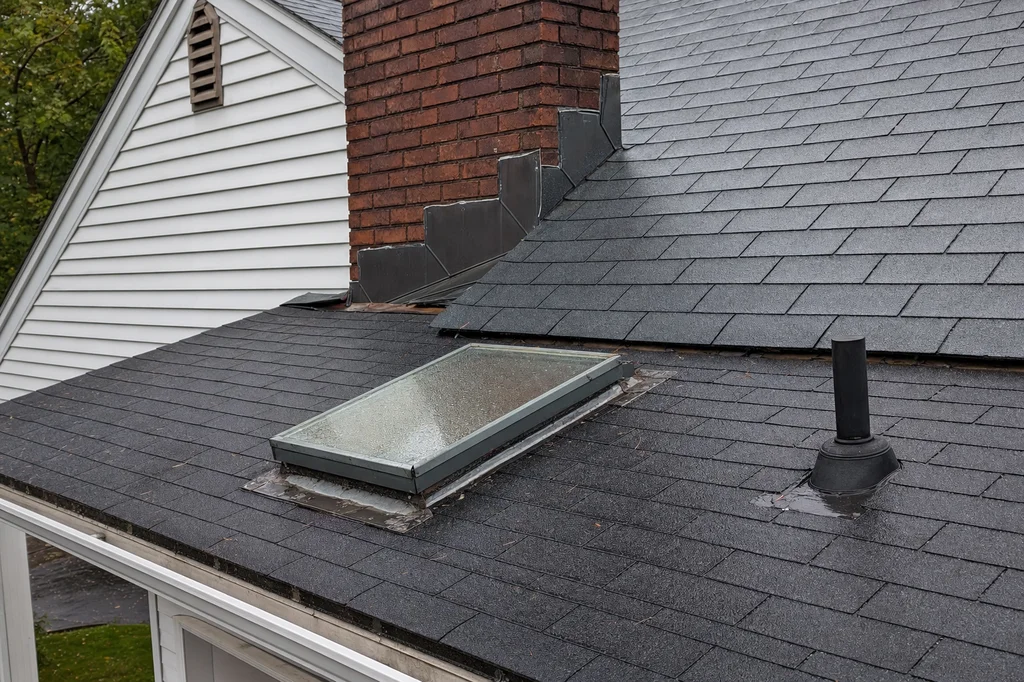
A costly New Jersey reroof dispute involving shingles on a 2/12 roof can arise if the low-slope section, skylight, and chimney flashing are treated like ordinary steep-slope work. Before work starts, make sure the written scope identifies the roof system and the details that keep water out around openings.
Why a 2/12 roof section needs its own roofing decision
A 2/12 section is not simply a less-steep version of the rest of your roof. Water drains more slowly there, so the roof covering, underlayment approach, and transitions need to suit that low-slope condition.
In the New Jersey case behind this warning, asphalt shingles were installed on the flatter section while shingles were used on a steeper portion of the same roof. The reported issue was that New Jersey code did not permit asphalt shingles on that 2/12 section. Ice-and-water protection beneath shingles was described as a possible approach in some locations, but it did not resolve the local-code concern in this case.
That distinction matters because a roof can look uniform from the ground while needing different materials across different planes. Do not accept a proposal that calls the whole project a “shingle roof” if part of it is low slope. Have a licensed roofing professional identify the pitch of each roof area and confirm the proposed system with the local building department or other qualified local authority before installation.
The costly failure was at roof details, not just shingles
Leaks often start where the roof is interrupted. The reported leak appeared within weeks of completion and involved a skylight problem, chimney flashing, and other deficiencies rather than a simple failure of shingles across an open roof field.
A roof has vulnerable transitions wherever water must move around an object or through an opening. In this case, the major details to define before work were:
- Low-slope transition: State exactly where the steep-slope roofing ends and where the low-slope system begins.
- Skylight type: The replacement skylight reportedly was not appropriate for that roof condition. The proposal should name the skylight type and explain that it is intended for the roof system being installed.
- Chimney flashing: The chimney reportedly was not properly flashed. Your scope should say whether existing flashing is removed, replaced, or integrated with the new roofing.
- Other penetrations: Plumbing boots and similar penetrations need to be included in the scope, since they are common leak locations.
The homeowner lesson is straightforward: a broad promise to “replace the roof” does not tell you how the contractor will handle the places most likely to leak. A detailed scope makes omissions easier to catch before materials arrive.
What the written scope should settle before reroofing begins
Your contract should settle the roof-system question before the old roof comes off. It should not leave the low-slope material, skylight choice, or chimney work to a field decision after the project has started.
Use the estimate to compare the actual assemblies being proposed, not only the total price. One contractor may be pricing a standard shingle replacement while another has accounted for the low-slope section and replacement of roof details. A lower initial number can omit work that later becomes a leak, a dispute, or a second roofing project.
- Map the roof planes. Have the proposal distinguish the steep portion from the 2/12 portion and identify the covering planned for each.
- Name the skylight work. If the skylight stays, the scope should state how it will be integrated. If it is replaced, the proposal should identify the replacement type rather than merely saying “skylight.”
- Describe chimney flashing work. Look for a clear statement of what will be removed and replaced at the chimney.
- Address local requirements. Require the contractor to identify permits and code-related requirements applicable to the roof design. Local requirements can differ, so confirm them with a licensed professional and the appropriate local authority.
- Document existing conditions. Keep dated photos of ceilings, skylights, and areas below the roof before work begins. If a new leak develops, those records help establish what changed.
Questions that expose an incomplete low-slope proposal
You do not need to direct roof installation to find gaps in a proposal. You need clear answers about the roof system and the interfaces where water can enter.
- Which areas of my roof are 2/12, and what material will cover each of them?
- Is the proposed low-slope system allowed for this roof in my New Jersey municipality?
- What skylight type is planned, and is it suitable for this roof condition?
- What exactly will be replaced or rebuilt at the chimney?
- Which penetrations are included in the flashing scope?
- If water enters after completion, who will inspect the issue and what written documentation will I receive?
Clear, specific answers are more useful than a general assurance that the roof will not leak. If a contractor cannot define the low-slope assembly or the skylight and chimney scope, pause before authorizing work.
When a second roofer may be the safer choice
A new interior leak after a reroof, especially near a skylight or chimney, deserves prompt professional evaluation. Repeated attempts to patch a system that was incorrectly specified can leave you with more disruption and still no reliable resolution.
In the reported New Jersey dispute, the homeowner no longer trusted the original company to correct the work. Bay Roofing was brought in to reroof the flatter portion, replace the skylights, and address the needed corrections. The reported price to fix the work was $12,000, the same amount as the original project; a new skylight alone was reported to cost $2,000. That is not a universal repair price. It shows how a wrong system choice and incomplete detail work can turn one roof job into two.
If you are choosing between contractors for a complicated reroof, favor the proposal that clearly accounts for the low-slope section and roof penetrations. Directorii lists verified contractors.
Responding to a leak without turning it into a scope argument
Start by documenting the active leak and notifying the contractor in writing. Keep messages focused on the location of the water, when it appeared, and what you want evaluated rather than debating fault before the roof is inspected.
Ask for a written diagnosis that addresses the low-slope material, skylight integration, chimney flashing, and any nearby penetrations. If the contractor proposes a repair, request a written description of the affected area and materials. Insurance coverage and claim handling can depend on your policy and circumstances, so discuss coverage questions directly with your insurer rather than assuming a roofing contractor can determine the outcome.
Source: Roofer made $12,000 in Roofing mistakes | Directorii Claim
FAQ
Can asphalt shingles be installed on a 2/12 roof?
It depends on the roof design and local requirements, so you should not assume a shingle system is acceptable on every 2/12 section. In the reported New Jersey case, asphalt shingles on a 2/12 area were described as prohibited by local code. Have a licensed roofing professional identify the roof pitch and confirm the proposed system locally.
Why does a 2/12 roof need a separate scope from the rest of my roof?
A 2/12 roof drains more slowly than a steeper roof plane and may require a different roofing approach. A proposal that describes every surface as standard shingle work can hide an important material and installation decision. The written scope should distinguish the low-slope area, the planned covering, and the transition to adjacent roof sections.
What should a reroof contract say about a skylight on a low-slope roof?
It should state whether the skylight will remain or be replaced and identify the type of skylight planned. In the reported dispute, the skylight selection was one of the problems on the low-slope section. Ask the roofer to explain how that specific skylight is intended to work with the proposed roofing system.
Should chimney flashing be included in a roof replacement estimate?
Your estimate should clearly state what work will occur at the chimney, including whether flashing is removed, replaced, or integrated with the new roof. The reported New Jersey leak involved improperly flashed chimney work. Chimneys, skylights, and other penetrations deserve more detail in a proposal than a general statement that flashing is included.
What should I do if my ceiling leaks shortly after a new roof is installed?
Document the leak, notify the contractor in writing, and request a written evaluation of the roofing details near the water entry. Focus on skylights, chimneys, low-slope transitions, and penetrations rather than assuming the shingles alone are at fault. If you need an independent assessment, hire a qualified local roofing professional.