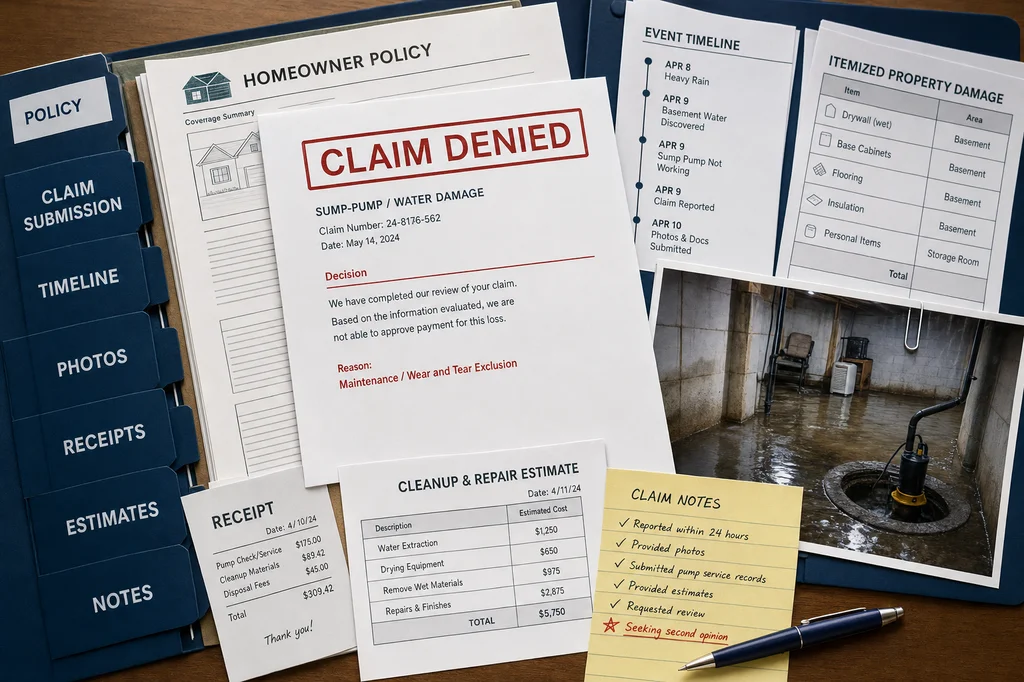
After USAA denied a Wisconsin homeowner’s sump-pump water-damage claim without sending an adjuster, preserve the denial and every claim record, then seek a prompt second opinion. The homeowner later reported that USAA paid the amount originally submitted.
A denial is a decision to examine, not a reason to discard your records
A claim denial may be based on the insurer’s interpretation of the loss, the policy, or the information it received. It does not tell you, by itself, whether that interpretation is correct for your policy and circumstances.
In the Wisconsin case, homeowner Chris Taber reported that storm water entered the drain, his sump pump became overwhelmed, and his basement flooded. He believed his policy covered the loss. USAA denied his reported $10,000 claim without sending an adjuster, according to the account.
The reported loss included a basement collection built over decades, including DVDs and other items that were damaged by water. That detail matters because a water event can create several categories of loss at once: damaged belongings, cleanup needs, and possible repairs. Keep the insurer’s written explanation connected to the specific damage you claimed.
Preserve USAA’s stated reason for denying the sump-pump claim
Your next move should be based on the actual denial language, not a phone-call summary. Save the documents before memories fade or files become hard to locate.
- Keep the written denial. It identifies the reason USAA gave and any policy wording it relied on.
- Save your original claim submission. Retain the item list, photos, receipts, estimates, and other records you sent.
- Make a dated event timeline. Include when the storm occurred, when you found the water, when you reported the loss, and who you spoke with.
- Record communications accurately. Keep emails, letters, claim numbers, and notes from calls in one place.
- Do not alter damaged-property documentation. If cleanup or disposal is necessary, preserve photos and records of what was removed.
This is not about trying to prove coverage on your own. It is about giving a qualified reviewer the same record that led to the denial, plus any missing details that could affect the analysis.
Focus on the explanation for the loss, not assumptions about coverage
A sump pump can run continuously during heavy rain and may become overwhelmed, but that fact alone does not establish whether a policy covers the resulting damage. Water-related coverage can depend on the policy language and the facts of the event.
Read the denial for the insurer’s description of what happened. Did it characterize the event as water backup, flooding, mechanical failure, drainage trouble, or something else? Compare that wording with your own records and the conditions you observed from inside the home. If the explanation seems incomplete or inconsistent with the loss, that is a reason to get it reviewed.
Do not rely on a general statement that sump-pump losses are always covered or always excluded. Your declarations page, endorsements, exclusions, and claim facts may all matter. An attorney or public adjuster can help you understand the issues that apply to your situation.
Get a prompt second opinion after a water-damage denial
A second opinion can help you decide whether the denial is supported by your policy and claim record. In the Wisconsin case, Taber hired insurance attorney Justin Wallace after the denial.
Wallace filed a lawsuit, and Taber was interviewed by TMJ4’s Channel 4. Wallace reported that USAA later contacted them about a resolution and paid the amount Taber had initially claimed. That outcome is specific to that claim; it does not predict how USAA or another insurer will handle yours.
Depending on your needs, a second opinion may come from an insurance attorney or a public adjuster. Confirm qualifications, fees, and the scope of any engagement before signing.
Use public attention carefully if the facts are documented
Media attention was part of the Wisconsin homeowner’s path, but it should not replace a complete claim file or professional advice. A clear, factual account may be useful if a local news organization chooses to investigate, especially when you can provide the denial, timeline, photos, and records without exaggeration.
Keep public statements limited to what you can document. Do not assume that contacting a reporter will change an insurer’s decision, and do not share private policy or claim information casually. If you have retained counsel, discuss public communications with that attorney first.
Keep repairs and the insurance dispute on separate tracks
You may need qualified help for cleanup or repairs while the claim is being reviewed. Make sure any work authorization clearly describes the work, price, payment timing, and whether the contractor is performing repairs rather than representing you in an insurance dispute.
If the water event also revealed exterior drainage work, Directorii lists verified contractors.
Insurance claim requirements can vary by policy and state. For a Wisconsin denial, confirm any time-sensitive requirements with a qualified attorney or your insurer rather than waiting for the dispute to resolve itself.
Source: Wisconsin sump-pump claim report
FAQ
What should I save after USAA denies my sump-pump claim?
Save the written denial, your original claim submission, photos, receipts, estimates, emails, claim number, and notes from calls. Also create a dated timeline of the storm, the water discovery, and the claim report. Those records help another qualified reviewer evaluate the denial based on the same facts and policy language.
Can USAA deny a sump-pump water-damage claim without sending an adjuster?
A Wisconsin homeowner reported that USAA denied his sump-pump water-damage claim without sending an adjuster. Whether an insurer’s handling is appropriate depends on the policy, the facts of the loss, and applicable requirements. Preserve the denial letter and seek a qualified second opinion if the stated reason does not make sense to you.
Should I get a public adjuster or an attorney after a claim denial?
A public adjuster or insurance attorney may be appropriate when you need an independent review of a denial. An attorney can advise on legal options, and a public adjuster may help evaluate and present a property claim. Verify qualifications, fees, and the service agreement before hiring either professional.
Does a sump pump being overwhelmed mean my insurance claim is covered?
No, an overwhelmed sump pump does not by itself establish coverage. Coverage may depend on the policy wording, endorsements, exclusions, and how the insurer classifies the water event. Read the denial reason closely and have the policy and claim file reviewed if the explanation appears incomplete or inconsistent with the loss.
Can contacting local news help with a denied insurance claim?
Local news attention was part of the Wisconsin homeowner’s case after he hired an attorney, but it is not a guaranteed way to change a claim outcome. If you contact media, stick to records you can document, such as the denial letter, timeline, photos, and claim submission. Discuss public communications with your attorney if you have one.